Blueberry Botanicals
Kanthari Chilly Seeds Red Country Variety 20 Seeds | Home Gardening
Kanthari Chilly Seeds Red Country Variety 20 Seeds | Home Gardening
Couldn't load pickup availability
Kanthari Chilly Seeds Red for Home & Terrace Gardening | Blueberry Botanicals
About This Variety
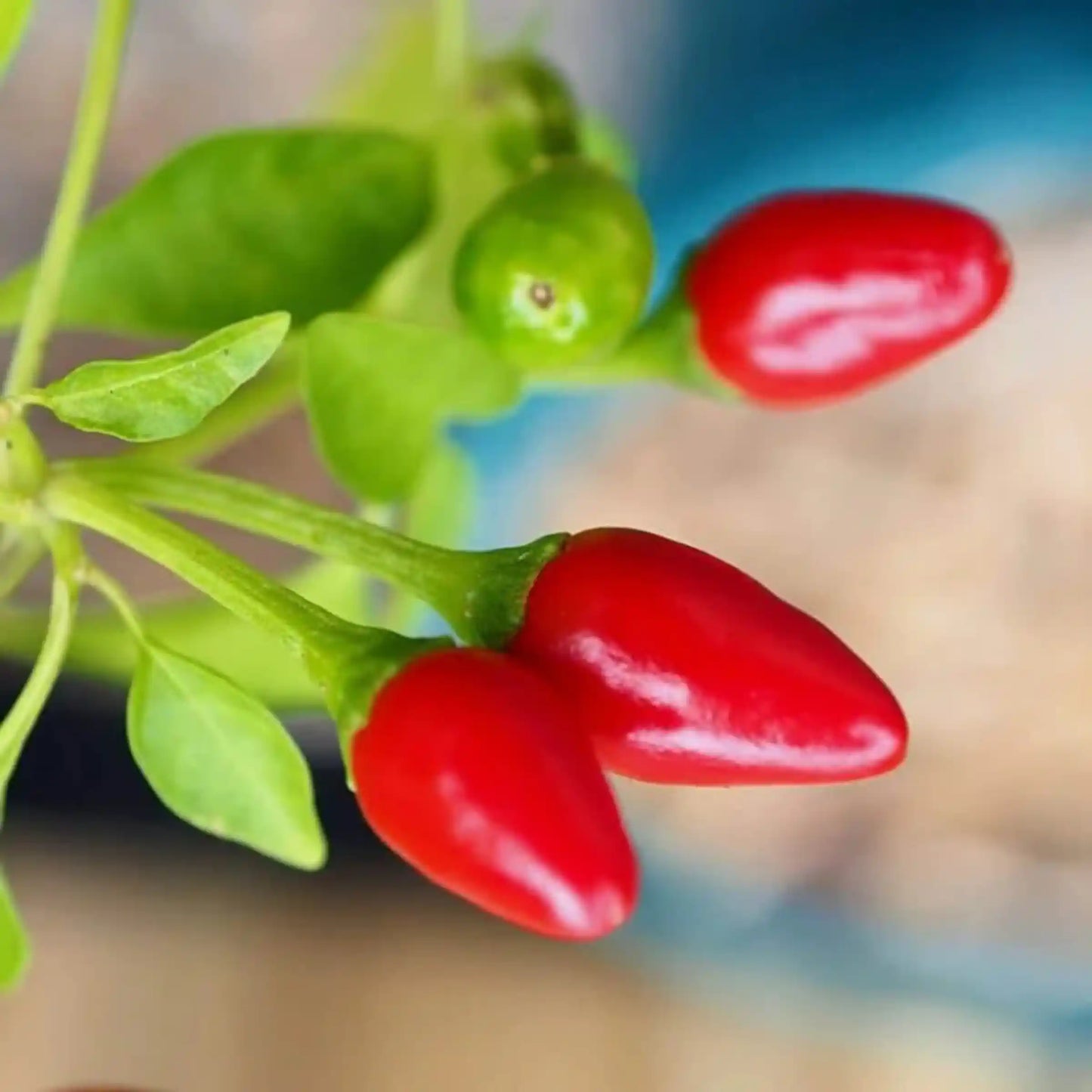
Kanthari Chilly (Capsicum frutescens) is a traditional South Indian variety producing small, extremely hot red peppers. This open-pollinated country variety is adapted for Indian home gardening and Gulf climates, making it popular among terrace and balcony gardeners seeking authentic, fiery chillies for traditional cuisine.
This non-GMO country variety is adaptable to Indian tropical, semi-arid, and Gulf climates when grown during appropriate warm seasons. Produces small red kanthari chillies with intense heat and authentic flavor. Suitable for container gardening and small spaces.
Results may vary depending on climate, soil quality, and growing care.
Seed-to-Harvest Timeline (Ranges Only)
- Germination: 10-21 days
- Transplanting: 30-40 days after sowing
- First flowering: 50-65 days from sowing
- First harvest: 80-100 days from sowing
- Total crop duration: 110-140 days
- Harvest window: 10-14 weeks (continuous harvest)
No guaranteed harvest results. Performance depends on growing conditions, temperature, and care.
Growing Guidance
Balcony / Pots
- Container size: 10-12 inch deep pot (minimum 8-10 liters)
- Potting mix ratio: 40% garden soil + 40% compost + 20% cocopeat/sand
- Seeds per pot: 2-3 seeds (thin to 1 strongest seedling)
- Sunlight requirement: 6-8 hours full sun daily
- Heat tolerance: Warm season crop; grows best 20-30°C
Open Land
- Plant spacing: 40-50 cm between plants
- Row spacing: 60-75 cm between rows
- Planting depth: 0.5-1 cm deep
- Soil preparation: Well-drained, rich in organic matter, pH 6.0-7.0
Greenhouse
- Temperature range: 20-30°C optimal; 15-35°C tolerable
- Humidity guidance: 60-70% relative humidity
- Ventilation advice: Good air circulation for pollination and disease prevention
Germination performance may vary based on seed storage, soil conditions, and climate.
Watering & Soil Care
- Seedling stage: Keep soil moist but not waterlogged; water gently daily
- Vegetative stage: Water every 2-3 days; increase frequency in hot weather
- Flowering stage: Maintain consistent moisture; avoid water stress during flowering
- Fruit development stage: Regular watering essential; reduce slightly as fruits mature
- Soil care: Apply compost or organic fertilizer every 2-3 weeks during growth
Companion Plants & Sustainable Gardening
- Compatible plants: Basil, onions, carrots, tomatoes, marigold
- Crop rotation suggestion: Follow with legumes or leafy greens; avoid planting after tomatoes or potatoes
- Organic gardening tips: Mulch to retain moisture; use neem-based organic sprays if needed
Note: Companion planting supports biodiversity but does not guarantee pest resistance or disease prevention.
Packaging & Quality
- Moisture-resistant packaging for seed protection
- Packed in India with quality control
- Labelled for home gardening purposes
- Lab germination tested under controlled conditions
- Approximately 20 seeds per pack
- Viability: 2-3 years with proper storage (cool, dry, dark place)
No field yield certification provided. Lab germination rates are indicative only.
Shipping & Regulatory Notice
- Ships across India (all pincodes)
- International shipping available to UAE, Qatar, Oman, Bahrain, Saudi Arabia, Kuwait
- Additional courier charges apply for international orders
- Secure payment gateway and WhatsApp customer support
- International shipping subject to customs regulations
- Buyer responsible for import compliance in destination country
Bulk Orders (100+ packs):
- Lab reports available on request
- Phytosanitary certificate available for international bulk orders
Responsible Gardening Disclaimer
The seeds listed are intended for home gardening purposes. Germination and harvest performance may vary depending on climate, soil quality, watering practices, seed storage conditions, and growing techniques. These products are not intended to diagnose, treat, cure, or prevent any disease.
- No guaranteed germination rate in field conditions
- No guaranteed yield or harvest results
- Intended for home gardening, not for commercial certification
- Sow during appropriate warm-season months for best results
Frequently Asked Questions
Can beginners grow kanthari chilly successfully?
Yes! Kanthari chilly is beginner-friendly and hardy. This traditional variety is forgiving of minor care mistakes. Start with good potting mix, provide 6-8 hours of sunlight, and water regularly. Most beginners see successful harvests within 80-100 days with basic care and attention to watering schedules.
Is kanthari chilly suitable for balcony pot gardening?
Absolutely! This compact variety is perfect for balcony pots. Use a 10-12 inch deep container with drainage holes and nutrient-rich potting mix. Place in a sunny spot. Balcony gardening works well year-round in moderate climates and during warm months in cooler regions.
What are the sunlight requirements for kanthari chilly?
Kanthari chilly needs 6-8 hours of direct sunlight daily for optimal growth and fruiting. In extremely hot climates (above 35°C), provide afternoon shade to prevent flower drop. Morning sun is essential for photosynthesis and fruit development. Insufficient sunlight leads to leggy plants and poor fruiting.
How long does it take from seed to harvest?
Kanthari chilly typically takes 80-100 days from sowing to first harvest under optimal conditions. Germination occurs in 10-21 days, transplanting around 30-40 days, flowering at 50-65 days, and red chillies are ready at 80-100 days. Timeline varies with temperature, sunlight, and care practices.
Is kanthari chilly suitable for kids' gardening projects?
Yes, but with caution! Kanthari chilly is educational for kids as they can observe plant growth and fruiting. However, these are extremely hot chillies. Teach children about handling very hot chillies safely and never touching eyes after contact. Adult supervision for harvesting is essential for safety.
Can I grow kanthari chilly without land or a garden?
Yes! Kanthari chilly thrives in containers on balconies, terraces, or rooftops. A 10-12 inch pot is sufficient for one plant. Container gardening makes kanthari accessible to apartment dwellers and urban gardeners across India and the Gulf region.
Can kanthari chilly grow in UAE or Gulf heat?
Kanthari chilly can be grown in the Gulf region during warm months (October to May). It tolerates heat well but needs protection from extreme temperatures above 40°C. Provide afternoon shade during peak summer, use larger pots for moisture retention, and water twice daily. Greenhouse cultivation extends the season.
Is kanthari chilly suitable for Kerala gardening?
Yes! Kanthari is a traditional Kerala variety that thrives in Kerala's warm, humid climate. Best results come from growing during warm months (March-October) with excellent air circulation. Use well-draining soil, ensure pots have drainage, and vertical spacing improves air flow. Kerala's climate is ideal for kanthari cultivation.
Can kanthari chilly grow in Delhi summer gardening?
Yes! Delhi summers (April-September) are suitable for kanthari chilly cultivation. The warm temperatures (25-35°C) promote vigorous growth and fruiting. Provide afternoon shade during peak summer heat (above 38°C). Summer monsoon season offers good conditions for kanthari cultivation in Delhi.
Can kanthari chilly grow in Rajasthan's dry climate?
Yes! Rajasthan's dry climate is suitable for kanthari chilly during warm months (April-September). The low humidity reduces fungal disease risk. However, consistent watering is critical as chilly needs moisture. Mulch heavily to retain soil moisture and provide afternoon shade during extreme summer heat above 40°C.
How much water does kanthari chilly need?
Kanthari chilly needs consistent moisture. Water every 2-3 days in moderate weather, daily in hot weather. Soil should remain moist but not waterlogged. Irregular watering causes flower drop and poor fruit development. Deep watering encourages strong root development. Mulching helps retain moisture and reduces watering frequency.
What potting mix is best for kanthari chilly seeds?
Use a rich, well-draining mix: 40% garden soil + 40% well-aged compost + 20% cocopeat or sand. Kanthari chilly prefers slightly acidic to neutral soil (pH 6.0-7.0). Add a handful of vermicompost for nutrients. Avoid heavy clay soil as it retains too much water and causes root rot.
When is the best time to sow kanthari chilly seeds in India?
In North India, sow kanthari chilly seeds in February-March for summer harvest or July-August for monsoon harvest. In South India, sow during warm months (March-September). Avoid winter sowing as chilly needs warm temperatures (20-30°C) for best growth. Monsoon season is ideal in most regions.
Can I harvest kanthari chilly multiple times?
Yes! Kanthari chilly produces continuously over 10-14 weeks. Harvest chillies regularly when they turn bright red and are firm. Frequent harvesting encourages the plant to produce more fruits. Pick chillies when fully red for maximum heat and flavor. Over-mature fruits reduce plant productivity.
How hot are kanthari chillies?
Kanthari chillies are extremely hot, ranking among the hottest Indian chilly varieties. They have intense, fiery heat that builds quickly. Use sparingly in cooking. Heat intensity increases with full sun exposure and plant stress. Handle with care and wash hands thoroughly after touching. Not recommended for those sensitive to spicy food.
Start Small. Grow Naturally.
Begin Your Kitchen Garden Today.
Simple to grow. Suitable for pots.
Upgrade Your Balcony Garden with Blueberry Botanicals.
Out of stock